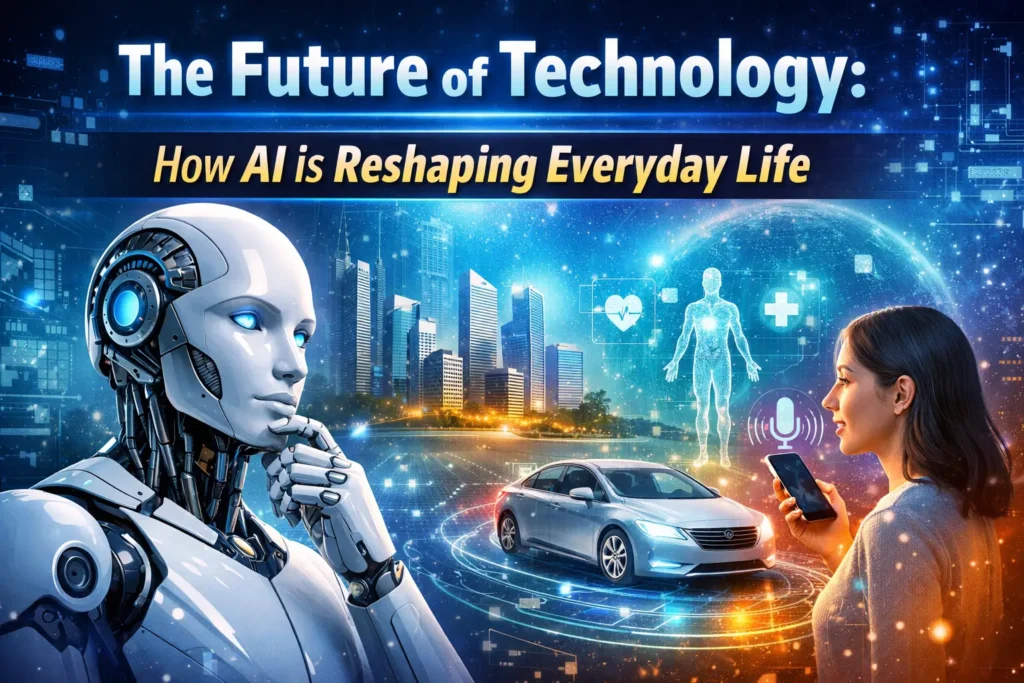
Technology has always evolved in waves—from the invention of the internet to the rise of smartphones. But today, we are experiencing one of the most transformative shifts yet: the rapid growth of artificial intelligence (AI). Unlike previous technologies, AI is not just a tool we use—it’s becoming something that can think, learn, and adapt alongside us.
AI in Daily Life
You might not notice it, but AI is already deeply integrated into your daily routine. From personalized recommendations on YouTube and Netflix to voice assistants like Siri or Google Assistant, AI quietly powers many of the conveniences we take for granted. Even navigation apps use AI to predict traffic and suggest faster routes.
In the near future, AI will become even more embedded. Smart homes will anticipate your needs—automatically adjusting lighting, temperature, and even your grocery lists.
AI in Work and Business
Businesses are leveraging AI to improve efficiency and decision-making. Chatbots handle customer service, data analysis tools uncover insights in seconds, and automation reduces repetitive tasks. This doesn’t necessarily mean jobs will disappear; rather, it means the nature of work will change.
The most valuable skills in the future won’t just be technical—they’ll include creativity, problem-solving, and the ability to work alongside intelligent systems.
Ethical Challenges
With great power comes great responsibility. AI raises important ethical questions:
- How do we ensure fairness and avoid bias?
- Who is responsible when AI makes a mistake?
- How do we protect user privacy?
These challenges require collaboration between governments, companies, and individuals to ensure AI benefits everyone.
The Road Ahead
We are still in the early stages of AI development. What we see today is just the beginning. In the coming years, AI could revolutionize healthcare through early disease detection, transform education through personalized learning, and even help address global issues like climate change.
Final Thoughts
Technology is not just shaping the future—it is the future. The key is to embrace it wisely. By staying informed and adaptable, we can ensure that technology works for us, not against us.